
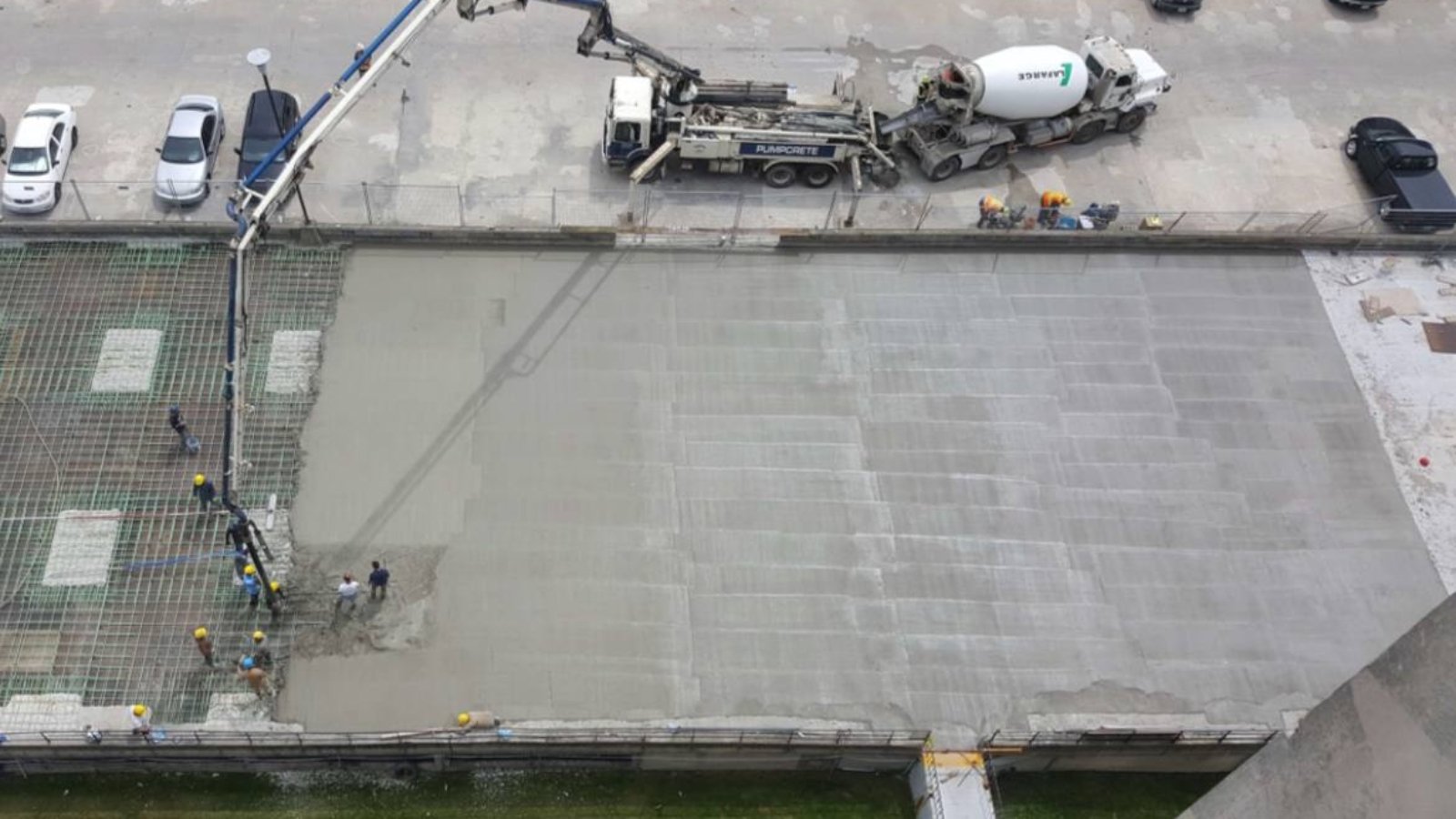
Parking garages and exposed garage decks are working structures. They support vehicle loads, experience regular traffic, collect water and de-icing materials, and often remain in service while repairs are completed. When deterioration develops, restoration must address both the concrete structure and the protective systems that help manage moisture and traffic exposure.
Common Garage-Deck Conditions
Signs of deterioration may include cracking, delaminated concrete, exposed reinforcing steel, leaking joints, worn traffic coatings, damaged curbs, ponding water, and staining on the underside of slabs. Conditions may be concentrated near drains, ramps, expansion joints, entrances, or frequently travelled areas.
A consultant-led investigation helps determine the extent of the work and whether repairs are localized or part of a broader deck-replacement program.
Concrete and Waterproofing Work Together
Repairing deteriorated concrete is only one part of many garage projects. The completed deck may also require a traffic-bearing waterproofing membrane or protective coating designed for vehicle use.
The substrate must be properly repaired and prepared before the new system is installed. Cracks, transitions, drains, joints, upturns, curbs, and penetrations require careful detailing. Drainage must also be considered so water does not remain on completed surfaces.
Phasing and Traffic Management
Closing an entire parking structure may not be practical. Many projects are divided into phases so portions of the garage remain accessible. This requires a coordinated traffic plan covering:
- Temporary vehicle routes and directional signage
- Parking-space closures and resident notices
- Safe pedestrian paths through or around the garage
- Material delivery and debris-removal routes
- Access for emergency and service vehicles
- Curing periods before repaired areas reopen
Phasing must account for the time required to remove concrete, complete repairs, perform inspections, install waterproofing, and allow materials to cure. Reopening an area too early can affect the finished system.
Hidden Conditions and Scope Changes
The full extent of concrete deterioration may not be visible until coatings are removed or the concrete is sounded and opened. This can affect quantities, schedule, and sequencing. Clear procedures for documenting and approving additional work help the project team respond efficiently.
Existing drains, joints, electrical systems, and mechanical equipment can also influence the repair approach. These interfaces should be reviewed before work begins.
Closeout and Ongoing Maintenance
After construction, the completed work should be reviewed and any identified deficiencies corrected. Owners should retain product information, warranties, repair records, and maintenance requirements.
Routine cleaning, drainage maintenance, inspections, and timely attention to damaged coatings or sealants can help protect the restored deck. A maintenance plan is especially important at ramps, turning areas, entrances, and other high-wear locations.
Zafarro Restoration Inc. performs structural concrete and garage-deck restoration for properties across Ontario. See the completed scope at 255 North Service Road in Hamilton, review our restoration services, or contact Zafarro about an upcoming garage project.
Add a Comment