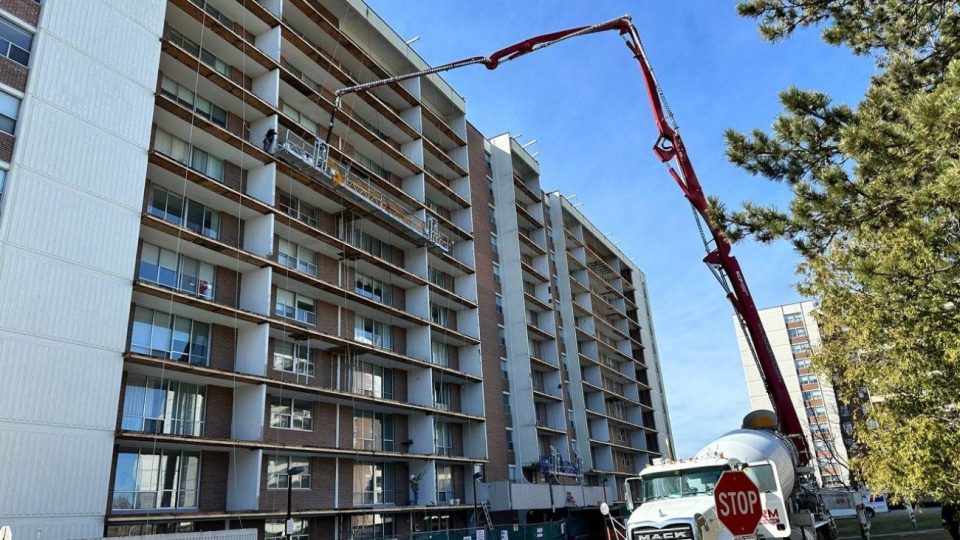
Planning Restoration Work on an Occupied High-Rise

High-rise restoration often takes place while residents, staff, visitors, and service providers continue to use the property. This makes project coordination just as important as the repair work itself.
A successful occupied-building project requires a clear understanding of access, protection, scheduling, communication, noise, dust, balcony restrictions, deliveries, and emergency routes. These considerations should be addressed before work begins and reviewed throughout the project.
Pre-Construction Planning
Before mobilization, the contractor, consultant, property manager, and owner typically review the drawings, specifications, site conditions, access strategy, staging areas, working hours, and communication procedures.
The project team should also identify sensitive areas such as building entrances, childcare or recreation spaces, loading zones, parking areas, mechanical equipment, and neighbouring properties. Planning these details early helps prevent avoidable conflicts once work is underway.
Access and Protection Systems
Exterior restoration may require swing stages, scaffolding, mast climbers, lifts, or suspended access equipment. The selected system depends on the building configuration and project scope.
At ground level, overhead protection, fencing, signage, controlled walkways, and restricted zones may be required. These measures help separate construction activities from residents and the public while allowing building operations to continue.
Resident and Tenant Communication
Residents should receive clear notice about activities that affect their units or balconies. Notices may include work dates, balcony clearing requirements, window restrictions, noise expectations, temporary closures, and contact information for questions.
Schedules may change because of weather, hidden conditions, inspections, material requirements, or access constraints. Regular updates help residents understand why changes occur and what to expect next.
Managing Noise, Dust, and Debris
Concrete removal, grinding, drilling, and surface preparation can produce noise and dust. Contractors use appropriate controls based on the work area and project requirements, but these activities may still be noticeable inside the building.
Work sequencing and approved working hours can help limit disruption. Debris should be contained, lowered, and removed through planned routes rather than moved through uncontrolled occupied areas.
Balcony and Window Restrictions
Residents may temporarily lose access to balconies while repairs, waterproofing, painting, caulking, or railing work is underway. Items should be removed before the scheduled start, and windows may need to remain closed during certain operations.
Property management and the contractor should confirm when an area is safe to reopen. Residents should not enter active work zones or move protection systems.
Quality Reviews and Completion
Restoration work is commonly reviewed in stages by the project consultant. Repairs may need inspection before reinforcing steel is covered, before concrete is placed, or before coatings and membranes are applied. Deficiency reviews and closeout documentation follow near completion.
Zafarro Restoration Inc. works with property managers, condominium corporations, consultants, and building owners to coordinate high-rise restoration on occupied properties. Explore our projects, review our services, or contact us to discuss project planning.