

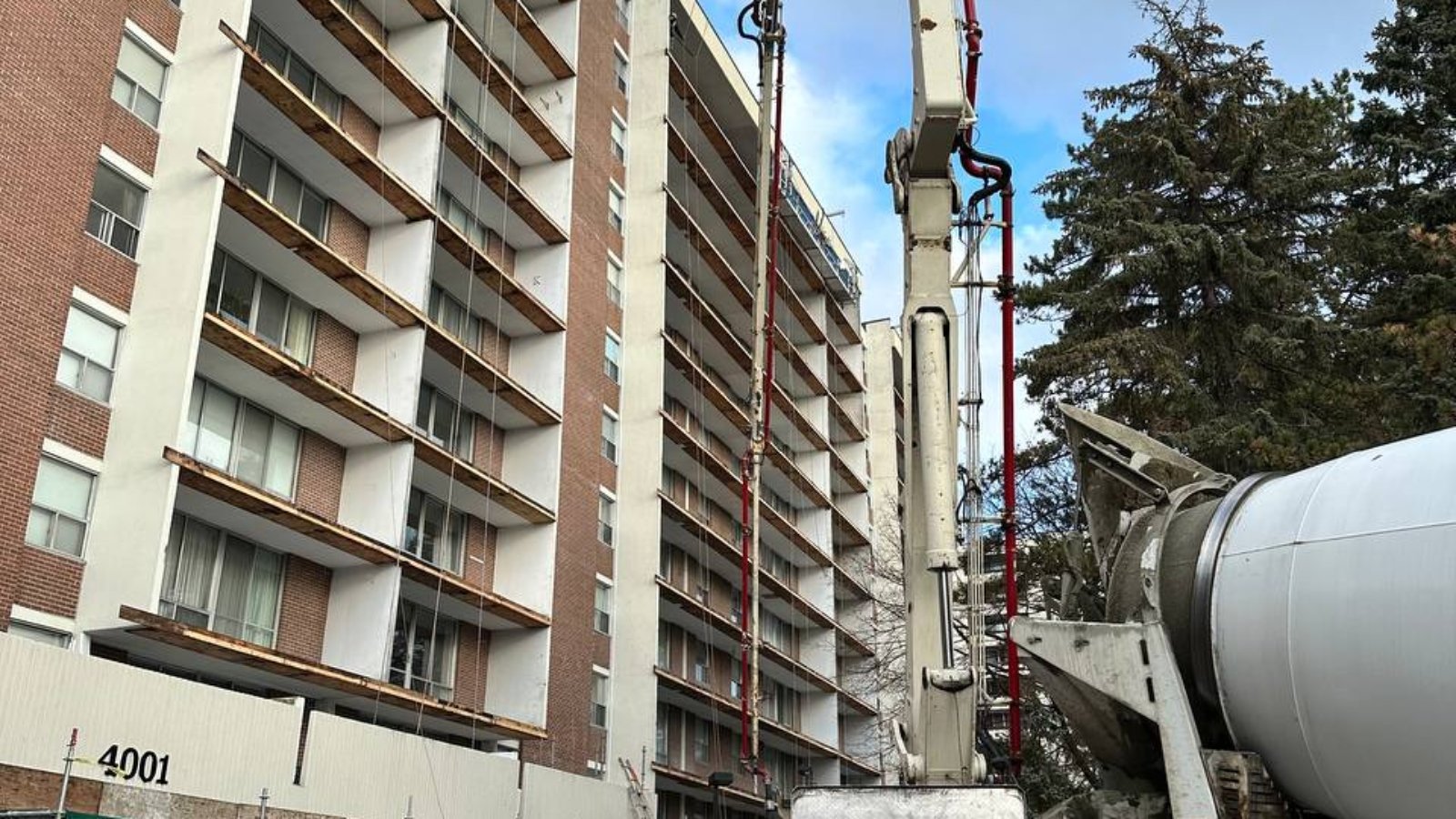
Balconies and exposed slab edges are among the most visible concrete components on a high-rise building. Because they are exposed to moisture, temperature changes, and everyday use, they may eventually require localized repairs or a larger restoration program.
Concrete restoration is not a single standard procedure. The repair approach depends on the condition of the concrete, the extent of deterioration, the location of reinforcing steel, the consultant’s specifications, access requirements, and the intended finish.
Why Concrete Deteriorates
Concrete is durable, but cracks and openings can allow moisture and contaminants to reach embedded reinforcing steel. When steel corrodes, it can expand and place pressure on the surrounding concrete. This may contribute to cracking, delamination, or loose concrete at slab edges, balcony surfaces, walls, and other exposed areas.
Other factors may include drainage conditions, failed coatings, previous repairs, movement, construction details, and long-term weather exposure.
How Repair Areas Are Identified
Before repairs begin, affected areas are typically identified through an investigation completed by the project consultant or other qualified professional. The repair drawings and specifications establish the required limits, materials, preparation methods, reinforcing treatment, placement procedures, and finishing requirements.
During construction, additional unsound concrete may become visible after the surface is opened. This is why communication between the contractor, consultant, and owner is important throughout the work.
Typical Restoration Sequence
- Access and protection: Work platforms, swing stages, scaffolding, or other access systems are installed as required. Ground-level protection and controlled work zones are established.
- Concrete removal: Deteriorated or unsound material is carefully removed to the limits required by the project documents.
- Reinforcing treatment: Exposed steel is cleaned and treated or supplemented where specified.
- Repair placement: Approved repair materials are installed using methods suited to the location and repair geometry.
- Finishing and curing: Repaired areas are finished and protected while the material develops the required properties.
- Coatings or waterproofing: Where included in the scope, protective systems are applied after preparation and curing requirements are satisfied.
Balcony Work Requires Careful Coordination
Balcony restoration affects residents directly. Access restrictions, furniture removal, noise, dust control, and temporary closures must be communicated clearly. A phased approach can help the building maintain normal operations while work progresses safely across elevations or balcony lines.
Repairing for Long-Term Performance
A successful concrete restoration program depends on proper investigation, compatible repair materials, thorough preparation, controlled installation, and attention to drainage and protection systems. Addressing only the visible surface without considering the underlying cause may not provide the intended service life.
Zafarro Restoration Inc. performs concrete, balcony, and slab-edge restoration for multi-storey properties across Ontario. Review our Bayview Avenue project, explore our services, or contact Zafarro about your building.
Add a Comment