

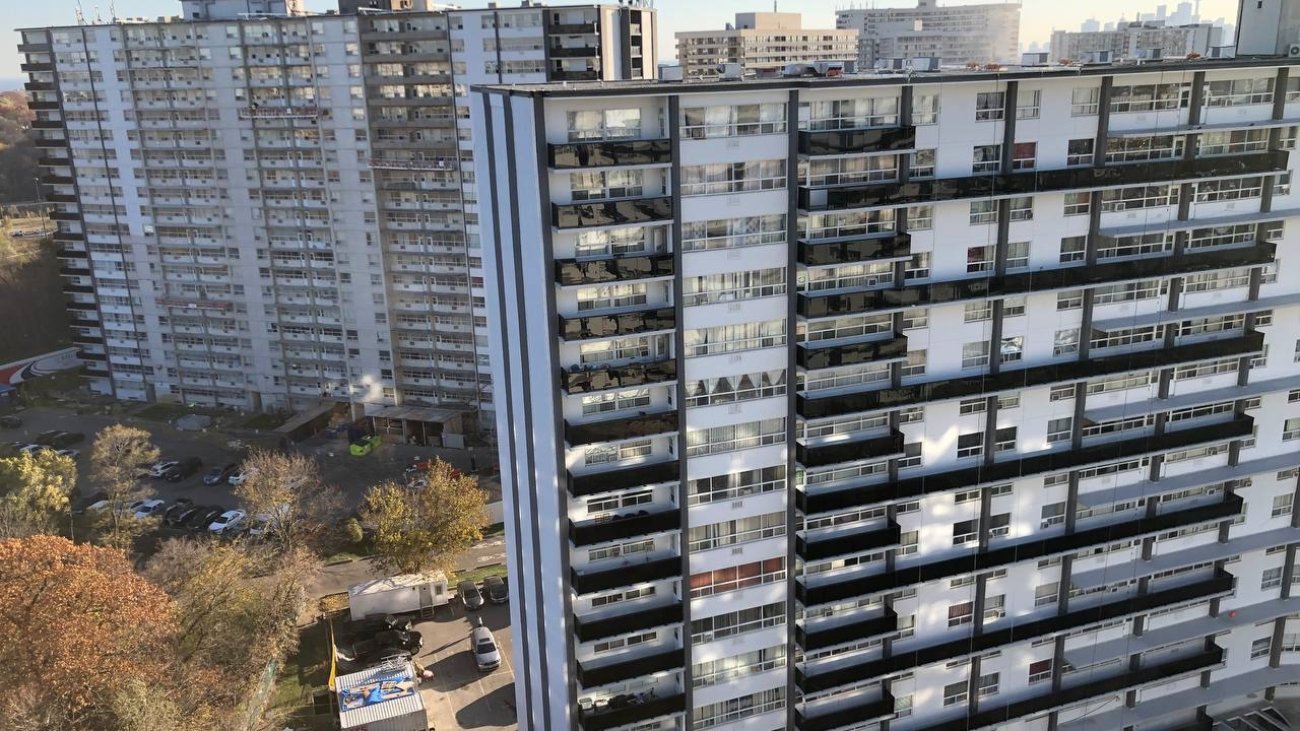
A high-rise building envelope is made up of many materials and connections. Concrete, masonry, windows, panels, coatings, membranes, flashings, and sealant joints must work together to manage rain, snow, drainage, air movement, and normal building movement.
When one part of that system fails, water may enter through cracks, open joints, deteriorated membranes, or poorly sealed transitions. Effective restoration therefore requires more than covering a visible stain. The source and pathway of moisture must be investigated so the repair can address the actual condition.
What Sealants Do
Exterior sealants are flexible materials installed at joints and transitions. They are commonly found around window and door perimeters, between façade panels, at masonry interfaces, around penetrations, and where different materials meet.
A properly designed sealant joint must accommodate movement while maintaining adhesion to the joint surfaces. Over time, sealants may harden, split, separate, or lose adhesion. Failed joints can create direct paths for water and air.
What Waterproofing Systems Do
Waterproofing systems are used to protect surfaces and assemblies that are regularly exposed to moisture. Depending on the project, they may include balcony membranes, traffic coatings, liquid-applied systems, joint treatments, or other specified products.
Successful installation depends on surface preparation, moisture conditions, compatible materials, correct thickness, detailing at edges and penetrations, and suitable curing conditions. The system must also connect properly with adjacent components so water is directed away from vulnerable areas.
Why Preparation Matters
Even a high-quality product may perform poorly when installed over unsuitable surfaces. Before applying sealants, coatings, or membranes, the substrate may require cleaning, grinding, removal of loose material, concrete repair, joint preparation, priming, and drying.
Existing materials should also be reviewed for compatibility. Applying a new product over an unknown or failing layer can reduce adhesion and make future maintenance more difficult.
Common Warning Signs
- Interior staining near windows or exterior walls
- Cracked, missing, or separated caulking
- Peeling balcony or traffic coatings
- Efflorescence or staining on masonry and concrete
- Recurring leaks after temporary surface repairs
- Water collecting where drainage should occur
Because water can travel behind finishes and through concealed paths, the visible location of a leak may not be the point of entry. Investigation and testing may be required before the repair scope is finalized.
A Coordinated Envelope Approach
Waterproofing, sealants, concrete repairs, masonry work, and coatings are often connected. For example, a balcony membrane should not be installed until deteriorated concrete has been repaired and the substrate is ready. Window perimeter caulking may need to coordinate with adjacent façade repairs or painting.
Zafarro Restoration Inc. provides waterproofing, sealant replacement, concrete repair, coatings, and coordinated building-envelope restoration across Ontario. View the scope completed at 71 Thorncliffe Park Drive, learn about our services, or contact our team.
Add a Comment